External threats—counterfeiting, fraud, and supply chain vulnerabilities—can damage your brand’s image and reputation. Protecting it is essential to maintaining trust and value.
Counterfeiting, parallel markets, and product recalls can harm your brand. A strong protection strategy—combining legal and technical measures—is essential.
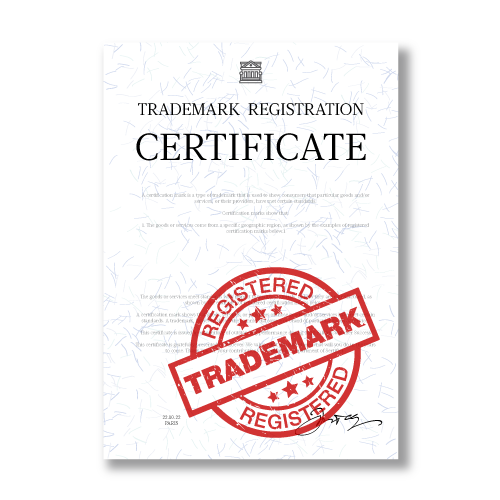
Your brand is a distinctive sign that differentiates your products or services from those of your competitors. Your brand is an intellectual property asset that must be registered in order to enforce your rights. This registration must first be done with the intellectual property office of your country of origin. If you are exporting, it is highly recommended to also register your trademark in the countries where your brand will be distributed.
The registration of your trademark in your country of origin does not necessarily give you priority in other countries. It is therefore preferable to register your brand as soon as possible in the main markets where it has an economic potential.
Law firms specializing in intellectual property rights are available to assist you in your national and international procedures.
There can be no trademark protection without a trademark registration!
If you do not register your trademark in your sector of activity, a competitor may register it in your place, thus imposing a very costly change of trademark.
Similarly, if you develop your commercial activity in new economic territories without registering your trademark, a local economic actor may have registered your trademark and ask you for economic compensation or to withdraw from the market.
Your logo is a crucial graphic element in a world where communication is based on images.
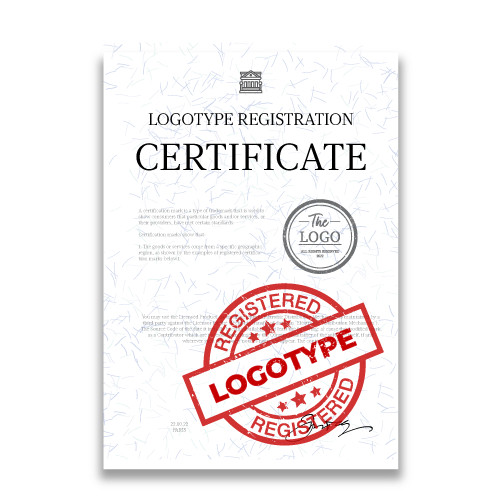
Like your brand, it must be registered with your intellectual property office.
Your law firm will assist you in protecting your logo.
If your logo is not registered, a counterfeiter can easily reproduce your logo or a similar version of it.
Without registration, there is no recognized intellectual property and the act of counterfeiting will be more difficult to prove.
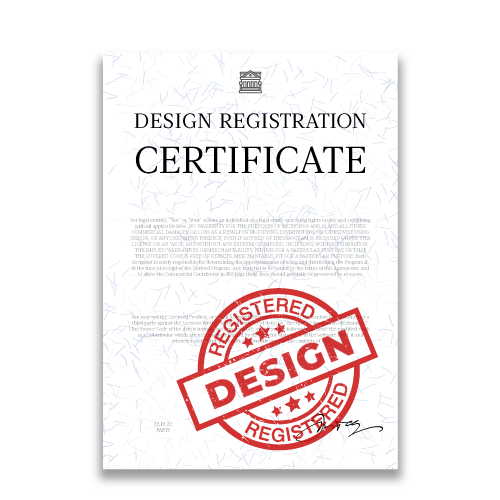
Some of your products have a particular design for technical, ergonomic or simply aesthetic reasons.
It is a strong differentiating element that your consumers quickly recognize.
To keep the exclusivity of your designs and to perpetuate your development, you must register them with your intellectual property office.
The risk of copying is even higher than for the logo.
Indeed, a competitor or a counterfeiter will be able to reproduce the general aspect of your product without any difficulty without being in infringement; and this whatever the name or trademark affixed to this copy.
A website is a window to the world as well as an important asset of your intellectual property.
First come, first served!
Your protection strategy must include reserving the website(s) in your company’s name.
A competitor or a counterfeiter can easily reserve a site with your name to usurp your brand.
A competitor or counterfeiter can develop a website with your brand name in order to mislead your consumers and give them false information or sell them products from parallel markets or counterfeits.
Just like the website, social media is a vital showcase for your company.
Even minimal presence helps prevent impersonation and protects your identity.
A competitor or counterfeiter can easily and without risk develop a profile on social networks usurping your brand.
He can then use this profile to divert your consumers to sites selling counterfeit products.
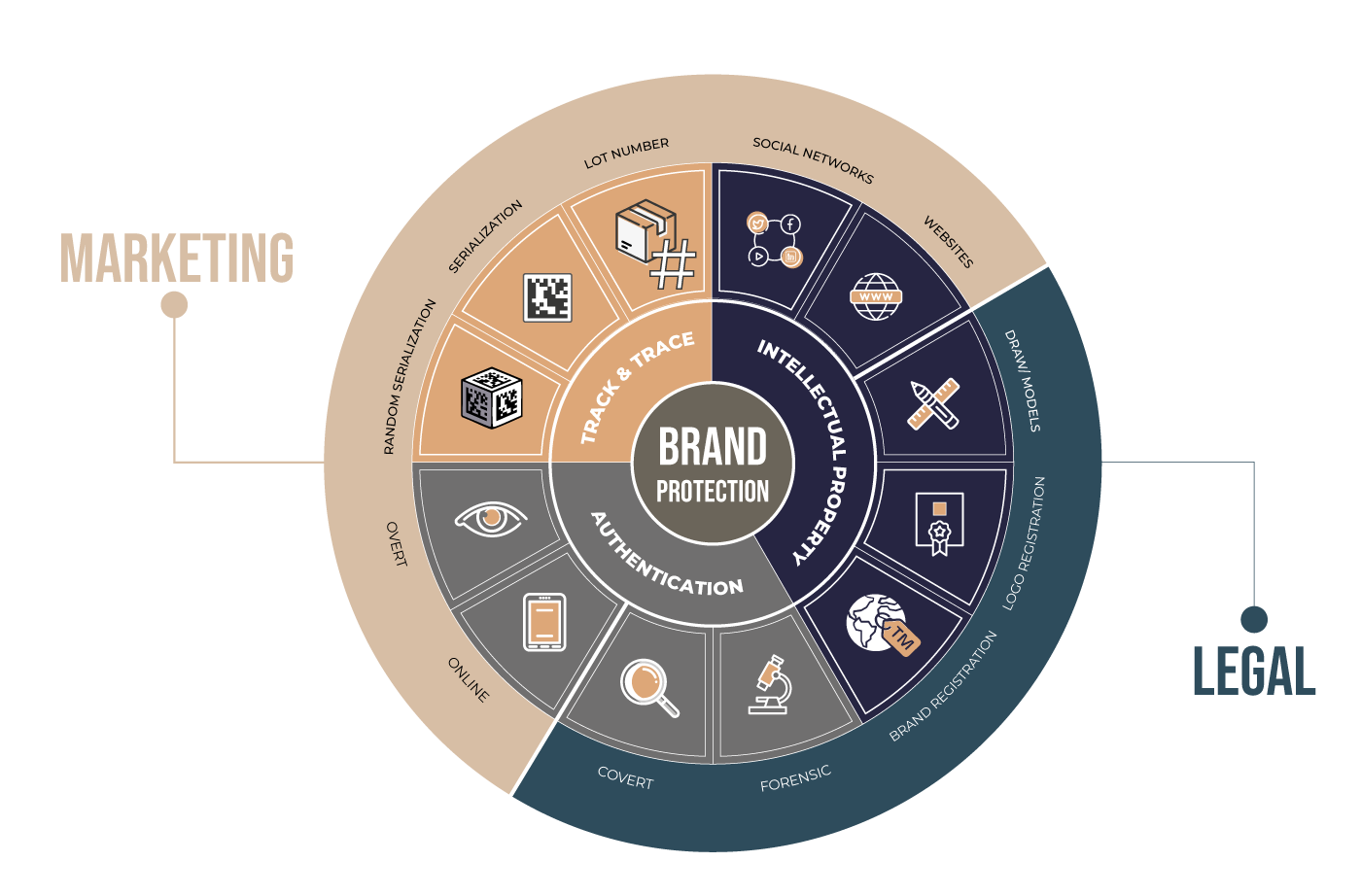
In order to protect your intellectual property and enforce your rights, it is therefore necessary to register as many of the elements involved in your brand building strategy as possible.
While registration is a necessary condition, it is far from sufficient to ensure the protection of the brand, the products and the consumers.
In addition to trademark registrations, it is imperative to have a proactive strategy of identification and authentication of products
Les marchés parallèles sont une menace importante pour votre marque.
Vos produits apparaissent dans des pays ou des circuits de distribution que vous n’avez pas choisi.
Ils sont dévalorisés avec, au final, un impact négatif sur votre marque.
Le marquage d’un numéro de lot ou la mise en place d’une solution de sérialisation doivent être associé à des moyens informatiques de traçabilité pour enregistrer les produits et leur mouvement.
Le logiciel de traçabilité CertiTRACK a spécifiquement été développé dans ce but.
L’identification et le suivi des produits avec CertiTRACK sur ligne de production en relation avec leur enregistrement sur la plateforme de services en ligne Prooftag Cerv pour le suivi des produits dans votre chaine logistique permet d’avoir une vue de bout en bout de la traçabilité de vos produits.
L’identification et le suivi des produits avec CertiTRACK sur ligne de production en relation avec leur enregistrement sur la plateforme de services en ligne Prooftag Cerv pour le suivi des produits dans votre chaine logistique permet d’avoir une vue de bout en bout de la TRAÇABILITÉ de vos produits.
How to identify and track&trace the product:
Identification technologies for traceability are part of the basic elements that can be used in the field of brand protection.
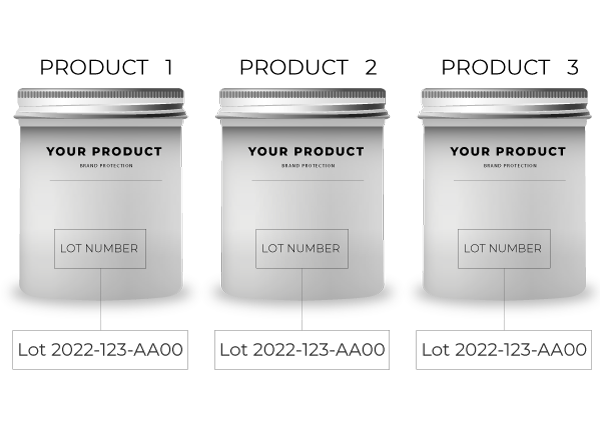
Batch numbers and manufacturing dates are elements that can be used to identify the original products.
For example, if a counterfeiter manufactures a series of products with batch numbers that do not exist at the original producer, then it is relatively easy to prove that they are counterfeits. It will be necessary to have records with all the batch numbers.
However, this is a very low level of identification of counterfeits because the counterfeiter can easily reproduce an existing batch number.
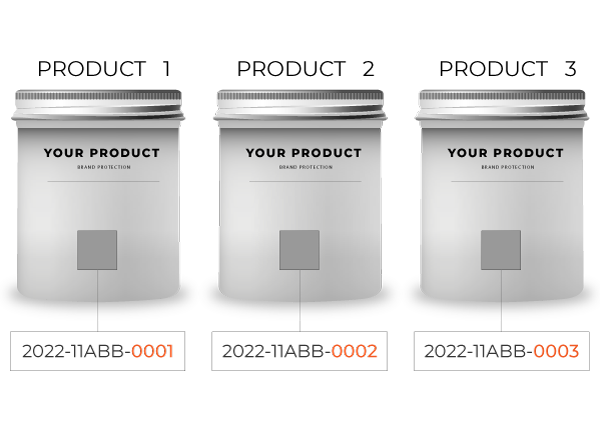
The implementation of a unique serial number per product (serialization) will complicate the task of the counterfeiter.
Indeed, if a batch of products is composed of products with the same serial number, it will be easy to identify a set of counterfeit products.
Again, a counterfeiter can circumvent the solution by entering consecutive serial numbers.
The implementation of serialization with datamatrix, QR Code, RFID or NFC.
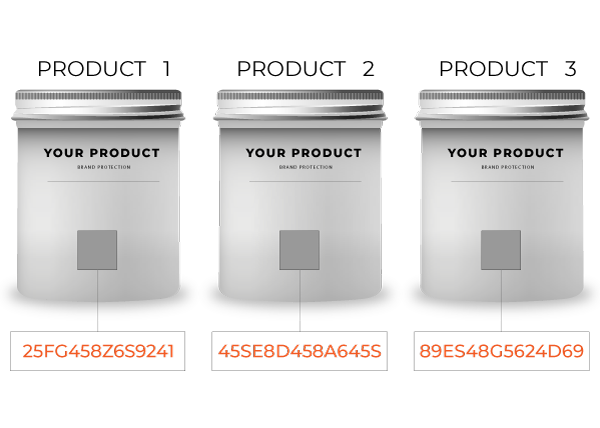
The implementation of a complex and random serial number is therefore recommended to make the task of the counterfeiter as difficult as possible.
Datamatrix, QR Code, RFID or NFC technologies are compatible with the random serialization principle.
The use of traceability for the protection of brands with the use of a traceability software is thus an interesting solution to have an identification of the products.
However, it cannot ensure a strong protection knowing that a number even in a 2D code or a RFID chip remains reproducible by a counterfeiter.
The implementation of authentication solutions in addition to traceability is a necessity when the products are intended for markets where the risks of counterfeiting are proven and high.
A brand protection strategy also relies on the authentication of its products.
The purpose of authentication technology is to make it difficult or impossible to counterfeit products. There are several types of anti-counterfeiting technologies available depending on the authentication methods you wish to implement. Depending on the level of expertise required to authenticate a product, you can choose from overt, covert or forensic security technologies.
Prooftag offers a wide range of visible and non-visible authentication technologies to meet your needs. Our technical teams are available to analyze your needs, taking into account your technical, economic and marketing constraints.
Our goal: to be your partner in the implementation of a brand protection strategy.