



You work hard to get your product to consumers in the best possible condition.
Whether you sell directly or through a carefully selected professional network, it is not acceptable to have your products unintentionally appear in markets you did not choose.
Parallel markets go by many names, such as grey markets or market diversion.
Parallel markets occur when a legal product appears in a distribution network or geographical area for which it was not originally intended.
Products intended for a particular geographic market are found in another geographic area.
This is a product that complies with the regulations in force in the country where it is distributed, but whose distribution has been granted exclusively to a wholesaler.
These parallel markets are in no way illegal from a legal point of view.
However, they can be in contradiction with commercial agreements between companies.
1. An alcohol intended for the European market is distributed in Russia.
2. A cosmetic product intended for the North American market is distributed in Japan.
However, it may also be a product that does not comply with local regulations.
The product intended for country A complies with the local regulations in force, which authorize certain components, but ends up in country B, which does not.
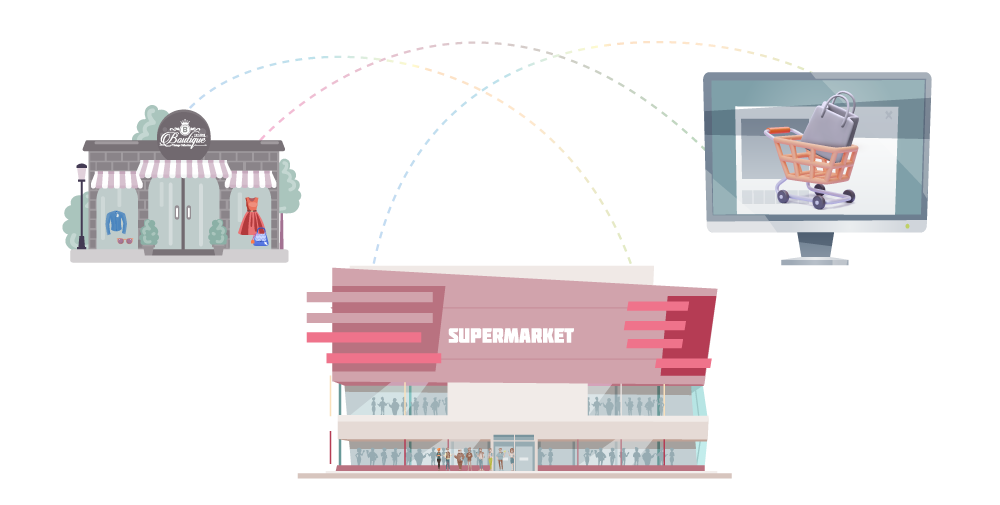
Products intended for one distribution sector are distributed in another type of network.
This is a product that complies with the regulations in force in the country where it is distributed, but whose distribution has been granted exclusively to a wholesaler.
These parallel markets are in no way illegal from a legal point of view.
However, they may be in contradiction with company trade agreements.
A wine producer who intended his bottles for restaurants finds his bottles in supermarkets
A brand of perfume for beauty salons is distributed on the Internet
A luxury brand is found as a loss leader in a supermarket
In most cases, an economic actor finds it interesting to set up a parallel market for economic reasons. This economic actor will take advantage of a price difference between two sectors to pocket an interesting margin.
It is fundamental to analyze why such price differences can be set up: prix peuvent se mettre en place :
Following important fluctuations between 2 currencies, a product distributed on market A ends up being at a lower price than on market B.
External cause very difficult to apprehend and to counter
No significant consequence if the variation quickly returns to a form of equilibrium
If the variation continues to increase, it may be necessary to review the pricing policy in order not to encourage the development of this parallel market
For marketing reasons, a brand voluntarily sells its products at different prices in two different geographical areas.
Wholesalers or resellers will take advantage of this situation and develop a parallel market.
Internal cause due to the commercial strategy
Loss of direct margin for the brand and penalization of resellers in the most expensive zone
Define the rules in the distribution agreements and implement a traceability solution
An economic actor with significant bargaining power with a brand obtains important discounts compared to its competitors allowing it to easily take additional market shares through a parallel market in sectors where it is not contractually authorized to distribute the products.
Internal cause due to the negotiating power of the brand with its network
The distribution network is in tension with the brand
Define the rules in the distribution agreements and implement a traceability solution to identify the products distributed by certain resellers
An economic actor poorly selected by the brand sets up an aggressive commercial distribution with distribution margins lower than those of his counterparts by not respecting the marketing mode recommended by the brand. The products will then end up in hard discounters or on e-commerce platforms.
Partially internal cause due to the commercial strategy
This marketing at an uncontrolled price will strongly impact the brand image, especially if the price difference is important.
The consumer, after being aware of the price of the products on parallel networks, will turn away from the brand or will refuse to pay the correct price.
Identify the faulty distributor with a traceability solution
An economic actor takes advantage of the absence of the brand’s presence on a territory to occupy this space.
Opportunism due to a global marketing but with a restricted distribution
No direct economic consequence except if the product is sold under different conditions than those desired by the brand at an uncontrolled price. The day the brand wishes to invest in this territory, it will have to deal with an already established parallel market.
Implement a marketing traceability solution to identify where the products are sold in order to quickly set up an official distribution network
An economic actor takes advantage of the absence of a brand in certain types of distribution networks to occupy that space.
Internal cause due to commercial strategy
Selective distribution is implemented as part of a positioning strategy. Marketing in undesirable networks will strongly impact the brand image, especially if the price difference is significant.
The consumer, once aware of the price of the products on parallel networks, will turn away from the brand or will refuse to pay the correct price.
Identify the faulty distributor with a traceability solution
An economic actor takes advantage of the prohibition of marketing of a product on a territory to meet the expectations of dissatisfied consumers by creating a parallel market.
Opportunism due to a global marketing but with a restricted distribution
The brand faces an important legal risk if it cannot demonstrate that it is not at the origin of this marketing
Implement a secure traceability solution to prove that this distribution is not organized by the brand
If the product is banned due to its nature or composition in a country with a parallel market, the brand is exposed to legal risks in the country where the product is distributed without its knowledge.

The creation of parallel markets due to a significant difference in value granted to two different wholesalers leads to a deterioration of the gross margin.
In this case, the quantities of products sold remain the same overall, but the wholesaler with the best purchasing power takes market share from his colleague.

When products appear in a parallel distribution network that is not compatible with the brand's image, this leads to a strong degradation of the brand's value for consumers.
Similarly, when the consumer realizes that he can obtain the product at a significantly lower price, this leads to a devaluation of the product and its brand, which in turn encourages the consumer to no longer accept the price recommended by the brand.

The appearance of parallel markets leads to the development of commercial tensions with the actors of the official network.
Indeed, consumers who find cheaper products elsewhere abandon the official network, resulting in a loss of turnover. Some official distributors may then be tempted to derefer the brand.
If the creation of a parallel market is done without the knowledge of the authorities and the product enters the country without paying customs duties, then the parallel trader is effectively outlawed.
If this product is subject to a particular tax system, then the brand can be worried by the tax authorities who will accuse it of being at the initiative of this parallel market to save customs duties.
To fight parallel markets, it is first necessary to limit as much as possible the causes that lead to them. This is more important if the brand has the levers to counter the economic interest of parallel traders.
However, some of these causes are inherent to the brand’s commercial strategy and positioning. In this case, it is very important to be able to work together with the entire distribution network.
The distribution network must have the same interests as the brand. If an actor in the distribution network has interests that are different from those of the brand, then he becomes a possible actor for the constitution of a parallel market.
It is important for the brand to clearly define its commercial agreements.
The distribution agreement must be explicit to define the framework in which wholesalers and distributors must act.
It must also define what is forbidden by the brand and the consequences in case of non-compliance with the agreement, especially in the case of marketing products outside the official commercial network.
It is important for the brand to act as quickly as possible to counter the emergence of a parallel network.
The situation must not be allowed to develop to the point where the brand would find itself in an inferior position vis-à-vis a parallel operator who has become too economically important.
To fight parallel markets, it is necessary to be able to identify the actors who are at the source of the supply of a parallel market.
Such an action requires the implementation of a serialization and traceability solution. This traceability solution will identify each product and associate it to its logistic units (box/pallet).
Each unit will then be tracked through the different stages of the supply chain (production, logistics center, wholesaler, retailer). The goal is to be able to know in fine the path followed by a product before it appears on a parallel market.
Unfortunately, not all traceability solutions are effective in this fight. The most seasoned diverters make the most obvious marking elements disappear.
On the other hand, highly technical and invisible solutions are difficult to implement and use in the production or supply chain.
Prooftag offers item LEVEL TRACEABILITY CONCEPTS that are